I build AI that works
in production.
I know because
I run one.
I’m a Claude Certified Architect who built a live recruitment SaaS from scratch — as a non-technical founder who once asked “what is a terminal?” I now help businesses diagnose the right AI problem and build the right solution on the Anthropic stack.
Why do most businesses
fall behind on AI?
Not because they don’t care. Because turning model capability into working software — reliably, in production, for a specific business problem — is genuinely hard. That’s the gap.
Every month Claude gets more capable. Models improve. New tools ship. The distance between what AI can do and what most businesses actually use keeps growing.
In 2006 I found candidates in a physical phone book. By 2024 the AI could have found them in seconds. The gap between those two realities was twenty years of tools, not capability. I got tired of waiting and built the bridge myself.
That’s what I do for businesses that can’t afford to wait twenty years.
← This is where I workWhat’s the right question to ask before any AI project?
It’s not “what AI tool should we use?” It’s “what kind of problem do we actually have?” That answer determines everything — what to build, how to measure success, and whether AI is even the right tool. Before architecture, before models, before a single line of code, I ask that question first. Most AI project failures happen before anyone opens a code editor.
Imagine a founder comes to you and says: "I need a chatbot." You could start building immediately. Or you could ask one question first: what problem are you actually trying to solve?
Thirty minutes later you find out the real answer: their support team spends half the day answering the same handful of questions, and customers who write in on weekends hear nothing until Monday. That’s not a chatbot problem. That’s an automation problem — different architecture, different success metrics, and a much higher return on investment. Built right, it could be running in days, not weeks.
The thirty-minute conversation is the most valuable part of the engagement. Everything else follows from it.
Give every knowledge worker access to Claude for research, drafting, analysis, and decision support. No workflow changes. No new systems. People use it however they find most useful.
There’s a defined process that takes too long, costs too much, or requires too many people. Claude can run it end to end. The key: clear inputs, clear outputs, clear success criteria.
AI embedded directly into something your customers interact with. Not a feature — the engine. This is the most complex path and the highest bar: it has to work reliably, at scale, in production.
Does every business problem need an AI solution?
No. Not every problem needs AI, and I’ll tell you when it doesn’t. I work exclusively with the Anthropic stack because I know it deeply — I built a production SaaS on it — but the first question for any project isn’t “how do we use Claude?” It’s “should we use Claude at all?” Saying no when it’s the right answer is the kind of thing clients remember when the next, bigger conversation comes around.
Sometimes a simple rules engine, a database query, or a well-structured spreadsheet is genuinely the right answer. AI adds latency, cost, and unpredictability. If a simpler solution exists, I’ll say so — and point you toward it.
Claude.ai, Claude for Teams, or Claude Code across your organization. Lower cost, faster time to value, no custom development required. If this solves your problem, there’s no reason to build something custom. I’ll help you deploy and adopt it properly.
Bespoke workflows, custom integrations, or a product built around Claude. Most flexibility, most engineering effort, highest investment. This is where I do my best work — when the problem genuinely requires something built from scratch on the Anthropic developer platform.
What’s your process for AI projects?
Four steps — Discover, Design, Build, Iterate — and Discover is the one that saves you from the other three: skip it, and the rest cost far more to get right. Every engagement follows the same arc; knowing which stage you’re in shapes what questions make sense to ask, what decisions are ready to be made, and where risk builds up if you move too fast.
Find the real problem. Which type? What’s actually broken? What does success look like in numbers? This stage shapes every decision that follows — and it’s where most projects go wrong when it’s skipped.
Model selection, architecture, API surface, prompt design, context management. Decisions made here are expensive to undo later. We get them right before we write code.
Implementation: prompts, tools, evals, integrations, deployment. I work in small staged changes — show before saving, confirm before executing. No big-bang releases.
Measure, harden, close the feedback loop. Production is earned here, not assumed. Most AI projects that fail do so at this stage — not because the code is wrong, but because nobody measured anything.
I don’t just consult on production AI.
I run it.
MindHunt AI is a Type 3 project — Claude embedded directly into a product that recruiters use every day. I built it myself, as a non-technical founder. That’s the most honest portfolio item I could have.
In November 2025 I asked "what is a terminal?" on day one of building MindHunt AI. By January 2026 it had real users. Today it has 300+ registered users, a paid subscription tier, and a CASA Tier 2 security audit behind it.
I built it entirely with Claude Code, FastAPI, MongoDB Atlas, and Railway. Claude API powers the candidate search, scoring, and personalized email outreach. The whole thing runs in production, handles real data, and gets used by real recruiters every day.
In 2006 I found candidates using the Kyiv Business Directory — a physical phone book. By 2024 the tools had changed but the pain hadn’t. Manual search, copy-paste into spreadsheets, generic outreach that nobody replies to. “Dear [first name]” followed by silence.
End-to-end on the Anthropic stack: natural language candidate search via Claude API, AI scoring, personalized Gmail outreach. FastAPI backend, MongoDB Atlas, Railway hosting. Kanban pipeline, email campaigns, real-time analytics. No tab-switching. No workarounds.
registered users. Built from zero by a non-technical founder. The Kyiv Business Directory is in storage somewhere.
Does ChatGPT recommend your business?
16% of signups on my own SaaS come from AI search — people ask ChatGPT, and it answers with a name. I check whose name it gives in your market: free, with the literal AI answers, report in 48 hours.
Vadym Lobariev
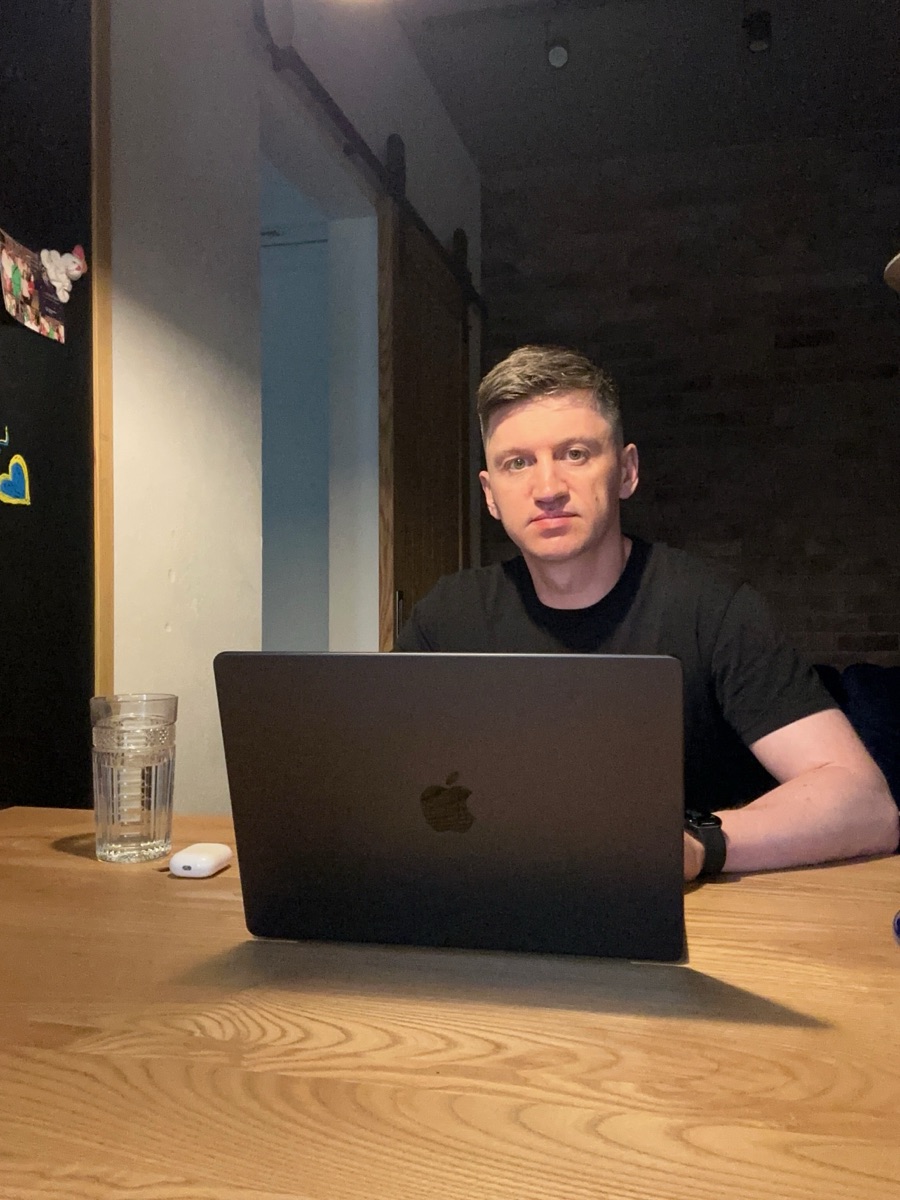
Claude Certified Architect. Part of the Anthropic Partner Program. Founder of MindHunt AI and MindHunt Agency. Based in Kyiv, Ukraine.
I spent 20 years in recruitment before I wrote my first line of code. I built MindHunt AI in 2025 — a production SaaS on the Anthropic stack — because I lived the problem it solves for long enough that I had no choice but to fix it myself.
That experience gives me something most AI developers don’t have: I’ve been the founder who needed the product AND the builder who had to deliver it. I know exactly where demos fall apart. I know what production doesn’t forgive.
I work with founders, agencies, and businesses who need AI built properly. If your project involves Claude, MCP, or moving from a prototype to something that actually runs — let’s talk.
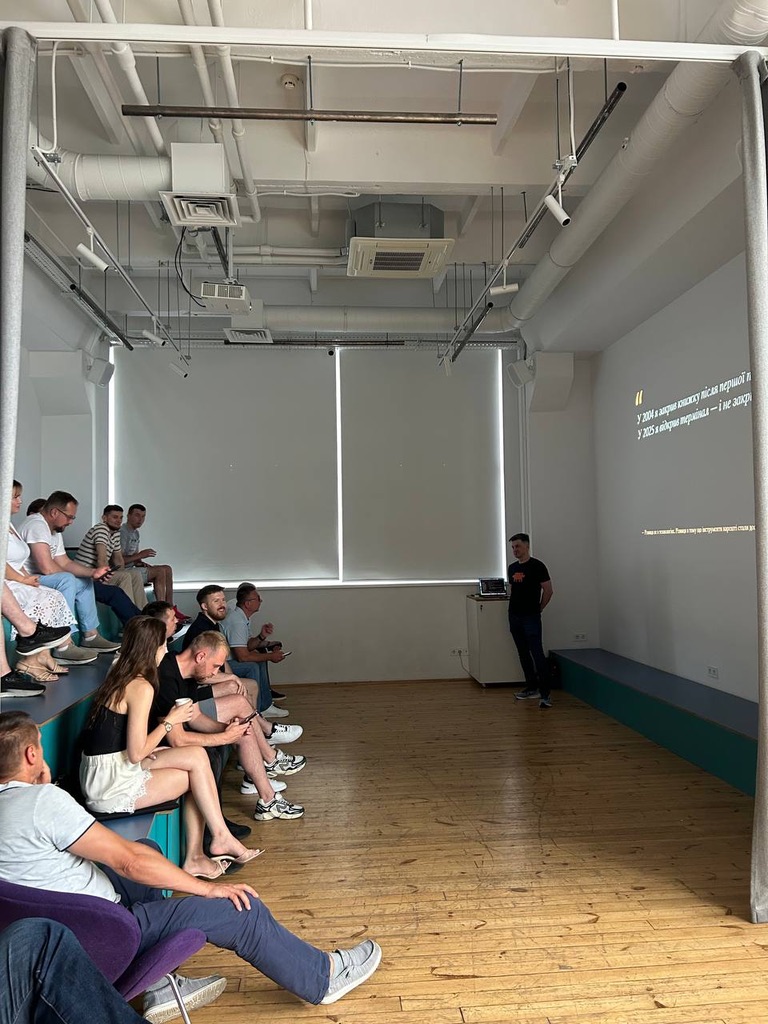
In 2025 I opened a terminal — and didn’t close it.”
From Zero
to Claude.
In November 2025 I asked “what is a terminal?” on day one of building MindHunt AI. By July 2026 I was a Claude Certified Architect presenting to rooms of business owners about how to actually use AI — not in theory, but in the work they do every day.
Most AI workshops teach people to write prompts. That’s like teaching someone to use a hammer by showing them what nails look like.
What people actually need is to understand what kind of problem they have — and how to think about where Claude fits into their real work. The rest follows naturally.
I run workshops for business teams, leadership groups, and company all-hands. The starting point is always the same: what does your team actually do all day, and where is Claude most obviously useful?
Questions people ask before reaching out.
Tell me what’s costing you the most time.
We’ll start with a 30-minute call to figure out which type of problem you have. That’s the most important conversation. Everything else — scope, architecture, price — follows from it.